AI-made ads that still feel human: a 2026 creative workflow
[AUTHOR NAME]
[ROLE]
Key takeaways
- AI speeds up research, scripts, variations, voiceovers, and resizing; people must lead strategy, brand voice, and final approval.
- A weekly test-and-learn loop keeps creative fresh and tells you what actually earns.
- Follow each platform's AI-labelling rules and get consent for any real person's likeness.
Where AI helps
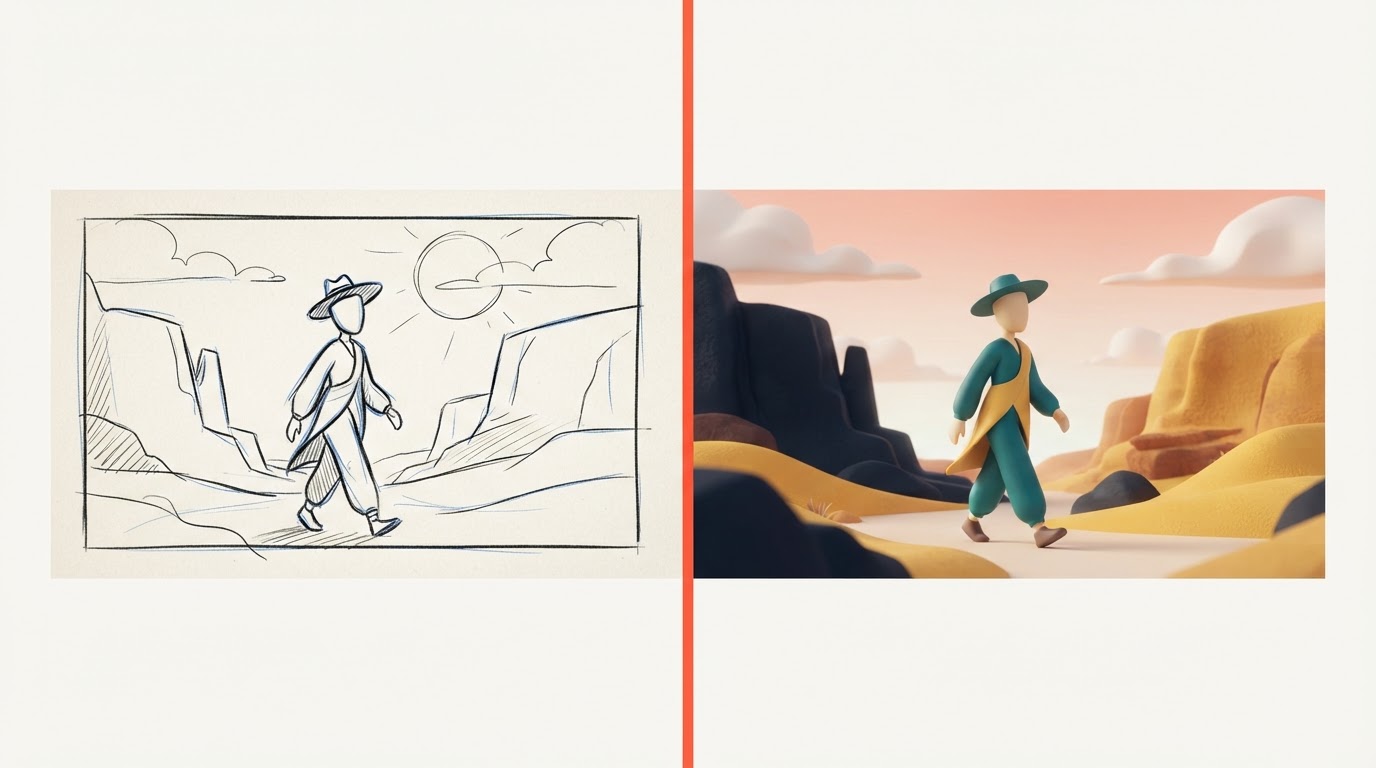
AI is genuinely useful in the parts of ad-making that used to eat hours. Research: it can summarise what your audience asks and complains about. Hooks: it can generate twenty opening lines in a minute. Scripts: it can draft a first version you refine. Variations: it can spin one idea into many formats fast.
Voiceovers and avatars can read a script in several languages without a studio. Resizing can take one video and cut it for every platform. Used well, AI turns the slow, expensive parts of production into fast, cheap ones.

Where people must lead
AI is bad at the things that make an ad feel human. Strategy: it cannot decide what your brand should stand for. Brand voice: it drifts toward average unless you hold the line. Real customer stories: it cannot feel them, only imitate them. Final approval: a person must watch the ad and ask whether it is true and whether it is you.
The rule is simple. Let AI do the volume. Let people do the judgement. The brands that get this right produce more, test more, and still sound like themselves. The brands that hand everything to AI produce more and sound like no one.
Want this done for you? Get a free growth plan.
Answer 8 quick questions and a strategist sends your plan on WhatsApp.
Explore Video, UGC and AI AvatarsA weekly test-and-learn creative loop
Creative is the lever in paid ads, and it fatigues fast. A weekly loop keeps it fresh. Plan the angles for the week. Create the variations, with AI helping on the volume. Test them against the current winners. Learn which hook and which format earned the cheapest result. Then do more of that next week.
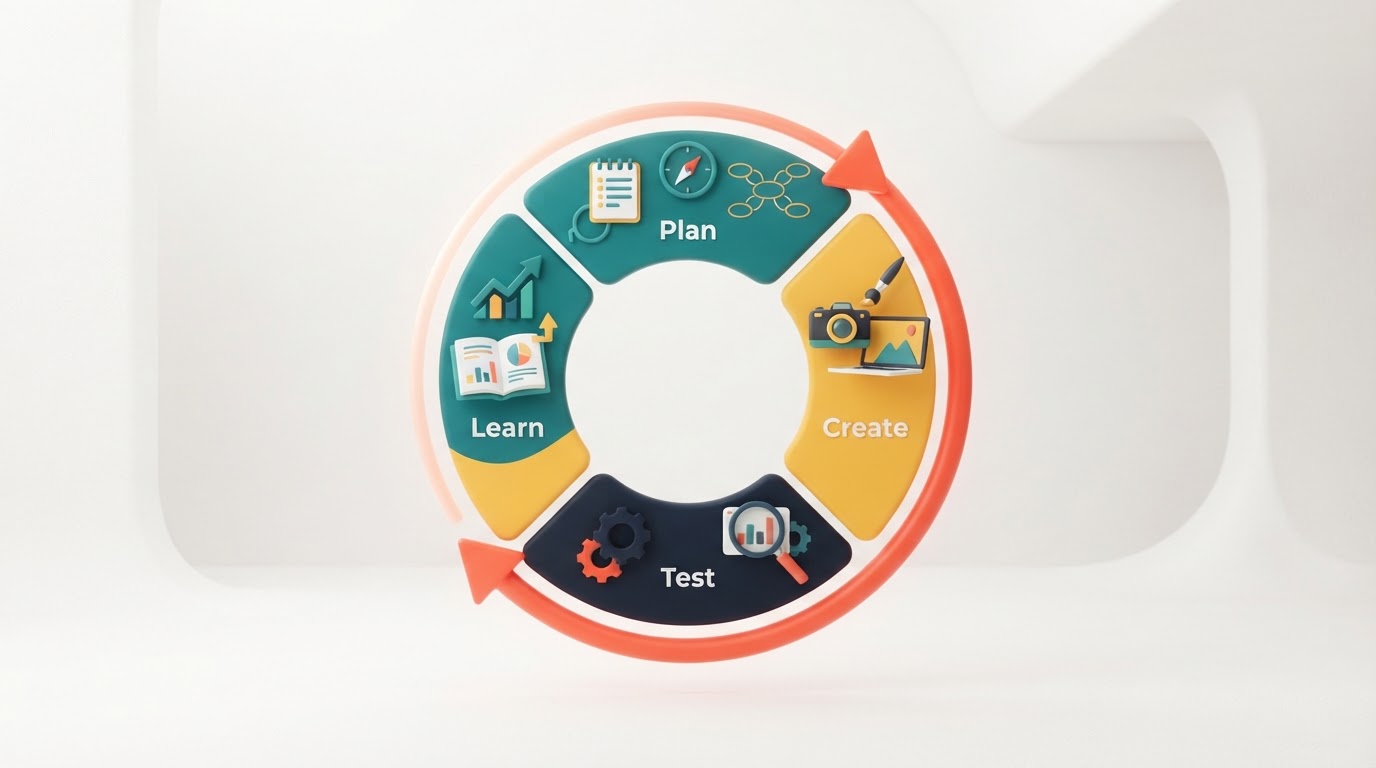
This is not a one-off campaign. It is a habit. The brands that win are the ones that ship more variations, learn faster, and keep the winners running while the losers get cut.
UGC plus AI
User-generated content still outperforms polished studio work for many products, because it looks real and earns trust. AI can extend it. It can turn one UGC clip into several cuts, add captions in multiple languages, and produce variations for different audiences.
The combination is powerful: real people on camera for trust, AI for speed and reach. The mistake is to replace the real person with an avatar when the real person is what made the ad work in the first place.
Following the rules on AI labelling and consent
Each platform now has rules on AI-labelling. Some require a disclosure when an ad contains AI-generated or significantly edited content. Some restrict realistic AI depictions of people. Know the rules for every platform you run on, and follow them.
If an ad uses a real person's likeness, get consent. That is true whether the person is filmed or whether their image is used to train or drive an avatar. Consent is not a nice-to-have. It is the line between a campaign that runs and one that gets pulled.
What to measure
Two numbers matter most. Hook rate: how many people watch past the first three seconds. That tells you whether the opening earned attention. Cost per result: what it actually costs to get a lead or a sale. That tells you whether the ad earned money.
Track both by variation. The point of producing more with AI is to learn which variation wins on these two numbers, then put the budget behind it.
Your starter checklist
- 1List the angles you want to test this week.
- 2Use AI to draft hooks and scripts, then refine in your brand voice.
- 3Produce variations for each platform, resized automatically.
- 4Add UGC where trust matters, and extend it with AI cuts.
- 5Label AI content where the platform requires it.
- 6Get consent for any real person's likeness.
- 7Track hook rate and cost per result by variation, and scale the winners.
FAQs
Will AI-made ads look fake to customers?
Only if you let AI lead the whole job. When people own strategy, brand voice, and final approval, AI just speeds up production. The ad still sounds like you, because you decide what 'you' means.
Do I need to label ads that use AI?
It depends on the platform and the content. Some require disclosure for AI-generated or significantly edited content. Check the rules for every platform you run on and follow them.
Is UGC still better than AI avatars?
For many products, real people on camera earn more trust. AI is best used to extend UGC, not replace it. Use avatars where a real person isn't possible, and keep UGC where trust is the goal.
Want this done for you?
Get a free, personalised growth plan in 60 seconds, or talk to a strategist today.


Your next customers are already searching. Let's meet them first.
Get a free, personalised growth plan in 60 seconds, or talk to a strategist today.
Nothing to sign today. Replies within minutes in business hours.